MASTER-PLANNED MANAGEMENT
Master-Planned Community Management
Master-planned communities require management that grows with your development. Your community starts with 50 homes and expands to 500 or more over several years. Within a single development, you may include single-family homes, townhomes, and condominiums. Amenities come online in phases as construction progresses. Infrastructure projects span years. Your board is managing not just today’s operations, but planning for a community that continues evolving.
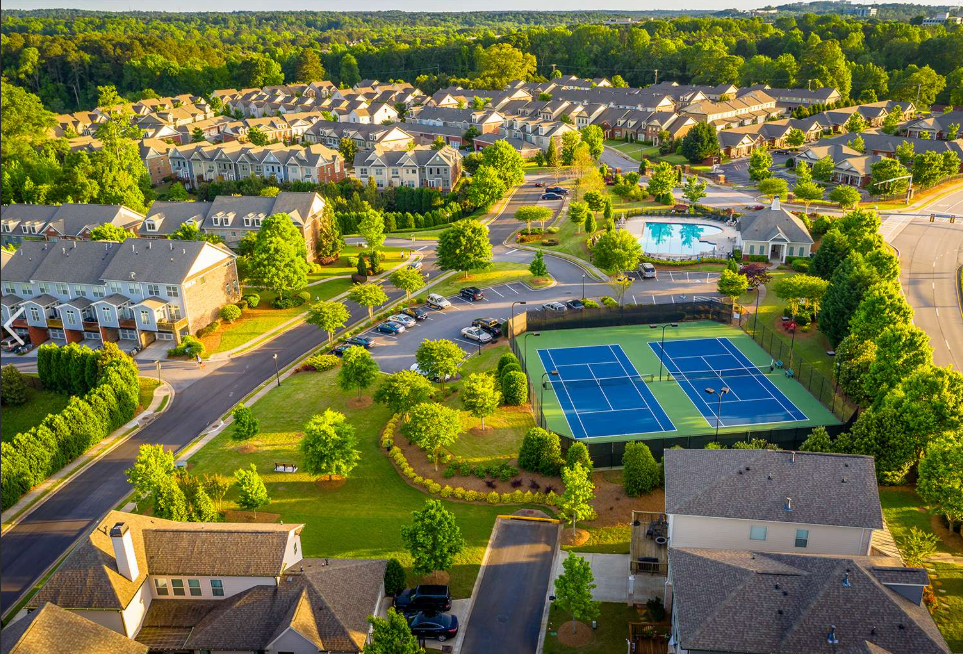
Master-planned developments require management that understands long-term vision and phased growth. Nova specializes in managing master-planned communities with services built around the Board Member Experience® and Homeowner Experience®. Whether your community is in early development with significant developer involvement or approaching final phases with homeowner governance, our team-based approach provides the continuity and expertise that master-planned communities require.
We partner with developers and boards managing communities that span multiple phases, property types, and years of development, ensuring professional management throughout every stage of your community’s growth.
What Makes Master-Planned Community Management Different
Master-planned communities evolve continuously. Unlike established neighborhoods where the scope remains constant, master-planned developments add new sections, expand amenities, and transition governance incrementally from developer control to homeowner leadership.
Phase coordination becomes central to operations. Early phases may be fully occupied while later phases remain under construction. Your community maintains existing areas while preparing infrastructure for future growth. Budgeting accounts for current operations plus future expansion. Capital planning considers both immediate needs and long-term requirements across all planned phases.
Mixed property types add complexity. A single master-planned community may include single-family homes with individual lot maintenance, townhomes with shared exterior responsibilities, and condominiums with comprehensive association obligations. Each property type requires different management approaches within your unified community vision.
Developer relationships extend over years rather than months. In master-planned communities, developers remain involved for years as phases develop, not just months. Management coordinates with developers on construction timelines and phasing decisions while advocating for residents already living in completed sections.
Our approach recognizes that master-planned communities require managers who understand phased development, can coordinate with developers professionally, and maintain consistent operations as your community grows and governance evolves.
The Board Member Experience® for Master-Planned Communities
Serving on a master-planned community board requires navigating unique challenges. You are making decisions that affect current residents while planning for future phases. Our Board Member Experience® provides your board with the guidance and support necessary to govern a growing, evolving community effectively.
Meeting Optimization™
We introduced Meeting Optimization™ specifically for conducting efficient board meetings where decisions are reached despite complex agendas. Master-planned community boards manage current operations, coordinate with developers regarding future phases, plan for amenity expansions, budget for infrastructure that serves both existing and future sections, and address resident concerns across different phases of development.
Board meetings without structure become lengthy sessions that leave important planning decisions unresolved.
Strategic Planning Across Phases
Master-planned communities face capital planning that extends across current and future phases. You are planning infrastructure improvements for existing sections while preparing for amenities and common areas in phases under development. Reserve studies must account for different timelines across your development, with some sections requiring immediate capital attention while others remain years away from major projects.
We bring experience with phased development to these planning discussions. Your board makes informed decisions supported by reserve studies reflecting your master-planned community’s unique phasing, along with financial modeling that accounts for your community’s growth trajectory.
Professional vendor management becomes more complex in master-planned communities. Vendors must serve existing sections while coordinating around ongoing construction in developing phases. Your manager handles these relationships, ensuring service quality across completed phases while maintaining coordination with development activities.
Your manager dedicates 90% of their time to supporting your board with the strategic planning that master-planned communities require. They maintain this focus because our solution team manages homeowner inquiries across your existing phases.




The Homeowner Experience® in Master-Planned Communities
Residents in master-planned communities expect professional service despite living in a development experiencing ongoing growth and change. Our Homeowner Experience® delivers responsive support designed for communities in various stages of development.
Communication During Development
Communication becomes particularly important in master-planned communities. Residents in completed phases need information about construction activities in developing sections. Everyone requires updates about amenity expansions, infrastructure projects spanning multiple phases, and timeline information for planned community features.
Our solution team manages communications systematically across your developing community. Residents receive clear information about how ongoing development affects their daily lives, timelines for amenity access, and updates regarding community growth.
Standards Across All Phases
Master-planned communities must maintain consistent standards across phases that may have been developed years apart. Architectural standards, covenant enforcement, and community guidelines apply equally to early and recent phases despite potential differences in construction timing and property styles.
Our partnership with Optics 360 provides systematic oversight across all phases of your master-planned community. Vehicle-mounted cameras capture video coverage throughout your development, ensuring that completed phases receive consistent attention regardless of when they were built.
Documentation occurs across your entire community. Video records track conditions and enforcement consistently, providing objective information about standards maintenance throughout all development phases.
Technology for Master-Planned Communities
Master-planned communities require technology that accommodates growth, tracks development across phases, and maintains records spanning years of community evolution.
Optics 360 for Phased Communities
Master-planned communities benefit significantly from video documentation that tracks development over time. Optics 360 captures footage across all phases of your community, documenting conditions in completed sections while providing records of infrastructure and common areas as development proceeds.
The system includes Capital 360 for tracking capital projects across multiple phases and Landscape 360 for monitoring common areas throughout your developing community. Video records provide valuable documentation of your community’s growth and development over time.
Cloud-Based Documentation for Long-Term Development
Master-planned communities generate substantial documentation across years of development. Governing documents may be amended as phases develop. Board meeting records span the entire development timeline. Vendor contracts evolve as your community grows. Infrastructure and amenity records cover multiple phases.
Comprehensive cloud-based documentation ensures that current board members and homeowners can access the full history of decisions, development, and planning that shaped your community. New residents understand how their master-planned community developed, and incoming board members access institutional knowledge spanning your development’s entire timeline.

Developer Partnership Throughout Development
Master-planned communities require effective coordination between professional management, developer interests, and homeowner governance. Nova excels at maintaining these relationships throughout your community’s development phases.
We manage the operational aspects of your growing community while coordinating professionally with developers regarding construction timelines, amenity completion, and phased turnover. As governance transfers incrementally from developer control to elected boards, we provide continuity and ensure that homeowner interests are represented professionally.
Our experience with master-planned developments means we understand the unique considerations at each phase: initial development with limited homeowner involvement, transitional periods with mixed developer and homeowner governance, and final phases approaching complete homeowner control.
Building Successful Master-Planned Communities
Master-planned communities succeed when they deliver on the comprehensive vision that attracted residents initially. This requires maintaining existing phases professionally while supporting continued development, ensuring that standards remain consistent across all phases, and managing the complex transition from developer vision to homeowner governance.
We work with boards to ensure that your master-planned community realizes its full potential. Professional management maintains operational quality during years of growth and development, preserving the vision that makes master-planned communities attractive to residents.
Your board maintains focus on both current operations and long-term planning. Day-to-day management proceeds smoothly across completed phases. Strategic planning accounts for your community’s continued growth. Residents throughout your developing community receive professional service. This is how master-planned communities thrive.
Managing a master-planned community? Contact Nova today to learn how our approach serves communities through all phases of development.

Ask Stella Anything
Our digital assistant is here for you day or night to answer questions and deploy solutions immediately.