PROFESSIONAL HOA MANAGEMENT
Professional HOA Management Services in Happy Valley, Oregon
Happy Valley has changed faster than just about any community in Clackamas County. Twenty years ago, much of what’s now developed was open hillside. Today, the city’s residential population has more than tripled, and most of the housing here was built within the last two decades. That growth pattern shapes everything about HOA management in the area, from the average age of the board to the kinds of capital projects coming up for the first time.

Most working residents commute out of Happy Valley for work, with downtown Portland, the southwest tech corridor, and the Gresham area drawing the largest shares of commuters. The board pool reflects that demographic, with members who are usually mid-career professionals balancing demanding work schedules against volunteer service. Property values reflect both the relative newness of the housing stock and the desirability of the area, particularly around the hillside neighborhoods with views toward Mount Hood. Residents here expect a level of attention and service that fits the price point of their homes.
Pacific Northwest weather is harder on buildings than Happy Valley boards usually realize, especially given how much of the housing here is hillside construction with significant exposure. Wet winters that last seven months take a toll on roof systems, siding, and any drainage that wasn’t built generously. Moss takes hold quickly on shaded slopes. Newer construction has its own vulnerabilities, with tight modern building envelopes that fail in specific ways when maintenance gets behind. Communities that come out ahead are the ones running real maintenance schedules with contractors who understand local conditions.
Two statutes govern community association operations in Oregon: ORS Chapter 94 for planned communities and ORS Chapter 100 for condominiums. They cover different things and impose different requirements. Both get amended on a regular basis. A board that hasn’t had attentive management tracking those changes can find itself working from old practices without realizing the gap until something surfaces it.
Community Types We Serve in Happy Valley
Master-Planned Communities. Eagle Landing, Scouters Mountain, and Altamont are some of the larger planned communities in the area, each with its own governance complexity, vendor relationships across multiple categories, and amenity infrastructure that needs steady attention. Smaller HOAs don’t operate at the same scale, but they share the challenge that no single manager can credibly stay on top of everything alone.
Single-Family HOAs. A lot of the city’s single-family HOAs were established within the last fifteen years, which means they’re still working through how covenant enforcement and architectural review should function in practice. We process applications consistently across submissions, which is what keeps homeowners from feeling like rules are getting applied unevenly.
Townhomes. Townhome construction made up a major share of Happy Valley’s growth, especially through the 2010s. Many of those associations are now coming up on their first major exterior work cycle, where shared roofs, siding, and paint all approach end-of-life at roughly the same time. Reserves that were set up at developer turnover are getting tested. Our townhome community management is built around that kind of capital project work as well as the ongoing operational side.
Condominiums. The condo inventory here has grown along with the mixed-use development around the Town Center and other commercial nodes. ORS Chapter 100 holds these associations to a higher bar than the planned community statute, particularly around financial statements and reserve handling, and our condominium management is built around those specific requirements.
Developer Transitions. Happy Valley is one of the more active development markets in the metro, and new communities reach the homeowner board handoff regularly. That handoff sets the trajectory for years afterward. A board that comes in with clean records and realistic reserves is in a position to govern. A board that comes into a mess spends its first term sorting out what should have been organized at the start.
Gated and Lifestyle Communities. Some of Happy Valley’s higher-end developments include gated and amenity-driven communities with their own service expectations. The key to running these well is vendor selection. Contractors who consistently deliver quality work earn their place over time. Others bid aggressively to win contracts and then deliver something less. Identifying the difference is what keeps operating budgets stable without service quality falling off.
Senior 55+. There’s a pretty consistent pattern in what senior community boards ask for. Plain-language updates that don’t require interpretation, maintenance handled on a schedule that residents don’t have to manage themselves, and someone running things who doesn’t escalate routine matters into ongoing projects.




How Nova Works With Happy Valley Boards
The shape of HOA management work doesn’t really change from one Oregon city to the next. The differences come from cost structure, local statute application, and what residents expect. In Happy Valley, all three of those have their own contours.
Board Member Experience
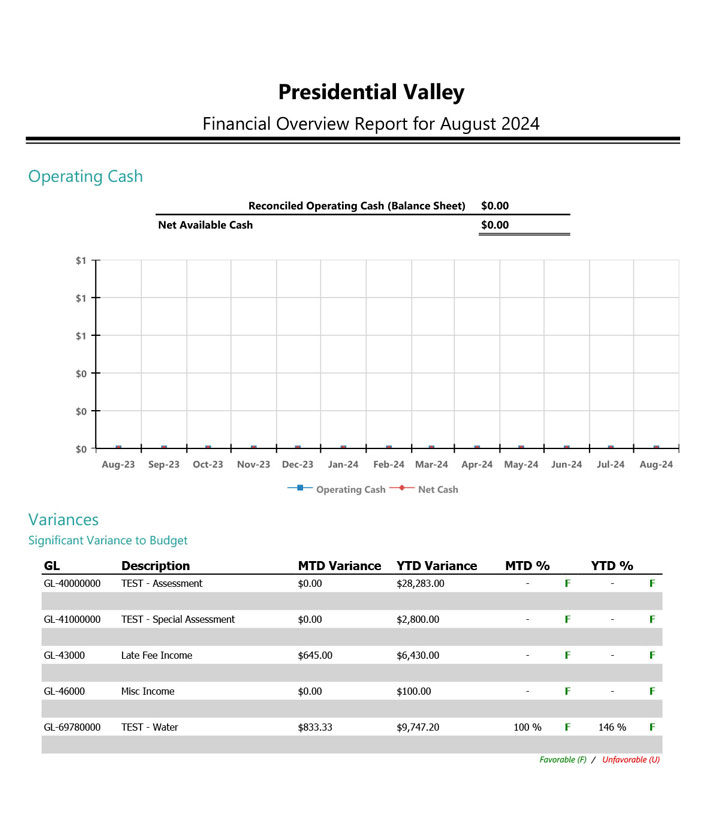
Board service in Happy Valley competes with a lot of other things in members’ lives, between demanding jobs, commutes that often run into Portland, and family responsibilities outside work hours. Meetings that drag on because materials weren’t reviewed in advance, or financial reports that require an accounting background to interpret, just don’t work for this group. Our Board Member Experience® is built around that reality. Your Association Manager has already gone through everything before walking into the meeting. Board packets arrive in time to actually read. The agenda focuses on what genuinely requires a board decision. Financial reports come back in a format board members can use, with operating funds and reserves laid out separately and the numbers anchored to real, current vendor quotes.
Homeowner Experience
The volume of routine homeowner contact at any given community is bigger than most boards realize until they’re in the role. A homeowner wants to verify pool hours. Another is requesting information about an ARC submission timeline. A third needs to confirm their last payment hit the right account. Sending all of that through your Association Manager creates a bottleneck that slows everyone down. Our Homeowner Experience® is built so those questions get handled by the Solution Team, where the focus is on responsive turnaround. Your Association Manager keeps their time free for the work that actually requires their experience. When something escalates past what the Solution Team can resolve, the Association Coordinator steps in.
Financial Management
The contractor market in Happy Valley operates inside metro Portland pricing rather than the lower rates further out. The qualified contractors here work across the southeast metro and stay busy. Lead times can stretch out when demand is up, and material costs follow regional supply patterns. Insurance has climbed every year for several years running with no real sign of slowing. Boards that build budgets from broad regional estimates almost always find themselves short when actual bids land.
Our financial services start with real contractor quotes from vendors active in the Happy Valley area. Monthly statements come back written in plain language. Collections operate under Oregon statute, which has specific procedural requirements built in. Reserve studies are priced on local figures, which means the numbers your board plans around connect to what real bids look like when they come in.
Team-Based Structure
The standard model across most management companies puts a single manager in charge of an entire community. That setup works most days. It fails on the days it doesn’t, which tend to be the days that matter most. A manager out sick, on vacation, or moving to a new job creates a service gap that boards feel immediately. Vendor calls go unanswered. Projects stall. Everything that the manager knew about your community walks out the door with them.
That problem is exactly what our team structure addresses. Your Association Manager is the one carrying the board relationship and taking on the situations that require experience to handle correctly. Vendor work and project tracking go through the Association Coordinator. The Solution Team picks up the homeowner volume that would otherwise pile up. The whole team operates from the same systems and the same records, so when somebody’s out, the work doesn’t stall, and your board doesn’t end up explaining it to homeowners.
Traditional management assigns everything to one manager. When that person takes a vacation, gets sick, or quits, service drops immediately. Deadlines slip. Vendors don’t hear back. All that manager’s knowledge leaves with them.
Our team structure prevents these problems. Association Managers handle board relationships and complex problem-solving. Association Coordinators manage projects and vendors. The Solution Team handles daily homeowner questions. Everyone uses shared systems, so service continues when someone’s unavailable.
Lake Stevens communities see real benefits. Email about an urgent issue late afternoon, and you’ll get a response, even if your main contact left early. Projects keep moving along because multiple people know the status. When staff leave, institutional knowledge stays documented.
New board members can access organized records instead of reconstructing history from scattered emails. When questions arise about previous board decisions, documentation provides context.
Montana communities handle harsh winters and specific seasonal maintenance requirements. Properties in growing cities like Bozeman and Missoula need management that understands both the environmental challenges and the state’s regulatory framework for community associations.
Why Happy Valley Communities Work With Nova
The factors that actually matter when boards are evaluating management options tend to be specific to whether the management company has working relationships with the contractors who do real work in your part of the metro. Whether they understand what Happy Valley projects actually cost when bids come in. Whether they’re engaged with Oregon community association law through CAI (Community Associations Institute) and applying it to your specific governing documents. Our customized management solutions start from what your community actually needs rather than fitting your association into a service template designed somewhere else.
Let's Talk About Your Happy Valley Community
Contact us to reach our team. Tell us about your association, and we’ll walk through what working together would look like.
FAQs
What does HOA management in Happy Valley usually cover?
It covers a wider range of work than most boards expect when they’re first evaluating options. The administrative side handles supplier coordination, board meeting management, governing document compliance, architectural review processing, and homeowner communications. The financial side includes the annual budget, monthly reporting, collections, accounts payable, reserve management, and year-end tax preparation and audit support. The property side runs through vendor oversight, preventive maintenance scheduling, and compliance inspections. Here in Happy Valley specifically, all of that takes place against metro-area contractor rates, insurance costs that keep increasing, and the legal requirements set out in ORS Chapter 94 and ORS Chapter 100.
How does Nova stay current with Oregon HOA law?
Through engaged CAI membership and ongoing professional development with a specific focus on Oregon community association statutes. When ORS 94 or ORS 100 changes, our work isn’t sending out a blanket notice but figuring out what the amendment actually means for your governing documents and your operations. Meeting procedures, collections, reserve disclosures, and financial reporting line up with current Oregon requirements rather than what was standard practice some years back.
What kinds of communities does Nova manage in Happy Valley?
The mix runs across pretty much all the residential varieties the city has. Single-family HOAs from newer developments and more established areas. Condo associations in older buildings and the newer mixed-use projects near the Town Center. Townhomes from various construction eras. Larger master-planned communities like the Eagle Landing and Scouters Mountain areas. Gated and lifestyle communities with shared amenity infrastructure. Communities are coming out of developer control as part of that transition to homeowner governance. Some associations want full management; others bring us in for particular functions. Our customized management solutions work for either.
How does Nova handle reserves and financials?
The number a reserve study estimates, and the number a Happy Valley contractor actually quotes for a real project are rarely the same. Most boards encounter that gap mid-project, which is not the moment anyone wants to find it. Our approach uses local pricing data and quotes from contractors who bid in this market, so the figures your board plans around line up with what real bids look like when they come in. Monthly financial services reports come back readable, with operating funds and reserves separated and explained in plain language. Collections operate under Oregon statute. Year-end books are organized in time for the CPA without anyone needing to follow up.
How does transitioning to Nova work?
The setup work happens before the start date rather than after. We gather and review governing documents, financial records, and vendor contracts during the prep period, set up systems for the community, and develop the working knowledge we need from day one. Homeowners hear from us in advance, so the change is communicated openly rather than discovered after the fact. Your board sits down with us early to walk through what’s worked, what hasn’t, and what you want from a management company moving forward. At 60 days, we revisit the service honestly against what your board expected at the outset. Contact us to talk through what this would look like for your association.
Traditional management assigns everything to one manager. When that person takes a vacation, gets sick, or quits, service drops immediately. Deadlines slip. Vendors don’t hear back. All that manager’s knowledge leaves with them.
Our team structure prevents these problems. Association Managers handle board relationships and complex problem-solving. Association Coordinators manage projects and vendors. The Solution Team handles daily homeowner questions. Everyone uses shared systems, so service continues when someone’s unavailable.
Lake Stevens communities see real benefits. Email about an urgent issue late afternoon, and you’ll get a response, even if your main contact left early. Projects keep moving along because multiple people know the status. When staff leave, institutional knowledge stays documented.
New board members can access organized records instead of reconstructing history from scattered emails. When questions arise about previous board decisions, documentation provides context.
Montana communities handle harsh winters and specific seasonal maintenance requirements. Properties in growing cities like Bozeman and Missoula need management that understands both the environmental challenges and the state’s regulatory framework for community associations.

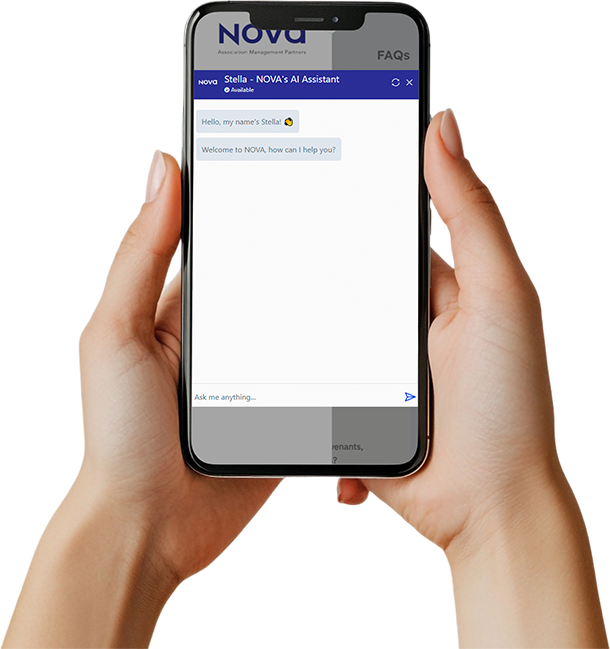
Ask Stella Anything
Our digital assistant is here for you day or night to answer questions and deploy solutions immediately.