PROFESSIONAL HOA MANAGEMENT
Professional HOA Management Services in Lake Oswego, Oregon
The economy in Lake Oswego looks different than what is happening in most of Oregon, and that determines how HOA management actually works here.

A lot of the regional workforce travels to Portland for professional jobs, while the city supports a sizable concentration of health care professionals, finance executives and business owners. Property values are among the highest in the state, and HOA budgets here reflect a market where residents expect maintenance, vendor work and overall management to meet a particular standard that is noticeably above what suburban Oregon communities elsewhere are used to.
The housing inventory tells the story of decades of development around the lake itself. Older established neighborhoods like First Addition, Lake Grove, and the areas immediately surrounding Oswego Lake contain some of the city’s most desirable single-family inventory, much of it with HOA governance tied to lake access or shared amenities. Newer townhome and condo developments have gone up closer to the commercial corridors along Boones Ferry Road and through the Mountain Park area. Mountain Park itself is one of the larger planned communities in the state, with its own governance structure and amenity infrastructure that has been operating for decades.
Pacific Northwest weather is harder on buildings than Lake Oswego boards usually realize until they compare notes with other Oregon communities. The Willamette Valley climate brings wet winters that work on roofs, siding and exterior finishes for months at a time. Moss runs aggressively on shaded properties and drainage issues develop quietly in older neighborhoods where the first infrastructure was not built for current rainfall patterns. The communities that handle it best are those that maintain exteriors on a tight schedule with vendors who actually understand Pacific Northwest conditions.
Oregon’s community association law lives in two separate statutes that boards and managers need to know well. ORS Chapter 94 governs planned communities, while ORS Chapter 100 covers condominiums, and the differences between them are significant. Both get amended regularly, and a board working from an older management company’s interpretations, or from a company that never tracked Oregon law carefully, can drift into compliance issues without realizing it until something forces the question.
Community Types We Serve in Lake Oswego
Single-Family HOAs. Architectural review in the single-family neighborhoods around the lake and through established areas like First Addition and Lake Grove stays busy, especially around exterior changes where homeowners and their neighbors care about how things look. We process applications consistently, which keeps the kind of small frustrations homeowners feel from escalating into board-level problems.
Condominiums. Lake Oswego’s condo inventory includes both older lakefront buildings and newer mixed-use developments closer to the commercial corridors. The older buildings have reached the part of their lifecycle where major systems need attention, and reserves built on assumptions from years back aren’t keeping up with current costs in this market. Since ORS Chapter 100 holds these associations to stricter standards than the planned community statute does, especially around reserve disclosures and financial reporting, our condominium management is built around those specific obligations.
Townhomes. The townhome construction that came through Lake Oswego over the past two decades produced a number of associations now working through significant capital projects, where roofs, siding, paint, and shared exterior systems all tend to come due at the same time. Reserves built on optimistic numbers aren’t holding up against current bids, which is where our townhome community management tends to get put to use.
Large-Scale and Master-Planned. Mountain Park and other larger planned communities in Lake Oswego aren’t anything like a basic neighborhood HOA. The vendor list is longer, the financials are more complex, and the amenity infrastructure runs on its own schedule. Board communication has to be deliberate, or things slip, and one person trying to manage all of it ends up stretched too thin.
Developer Services. New residential development continues to move through the Lake Oswego area, and each new community eventually hits the handoff from developer to homeowner board. That transition matters quite a bit. A board taking over a community with organized records, working vendor relationships, and realistic reserves starts in a very different position than a board taking over chaos. The cleanup work from a bad handoff can shape years of board service.
Gated and Lifestyle Communities. Lake Oswego has a number of higher-end communities and lakefront properties where residents have specific ideas about how things should function. The trick to keeping these communities running well isn’t really about working harder. It comes down to vendor selection. Some contractors do dependable work year after year, and others will tell you whatever they need to in order to win the job. Knowing the difference is what keeps operating costs under control without service quality slipping.
Senior 55+. The boards in Lake Oswego’s senior communities tend to look for the same things. They want clear communication, maintenance that gets handled before it becomes a complaint, and a management company that doesn’t turn small things into bigger projects than they should be.




What Lake Oswego Boards Get From Nova
The core work of HOA management doesn’t change much from one city to the next. What changes is what things cost, which laws apply, and what residents expect. Lake Oswego has its own answers on all three.
Board Member Experience
Most Lake Oswego board members are professionals with demanding careers, whether they’re commuting into Portland, running businesses locally, or working in healthcare or finance. They didn’t take the seat looking for extra time commitments, and meetings that run long because nobody prepared properly.
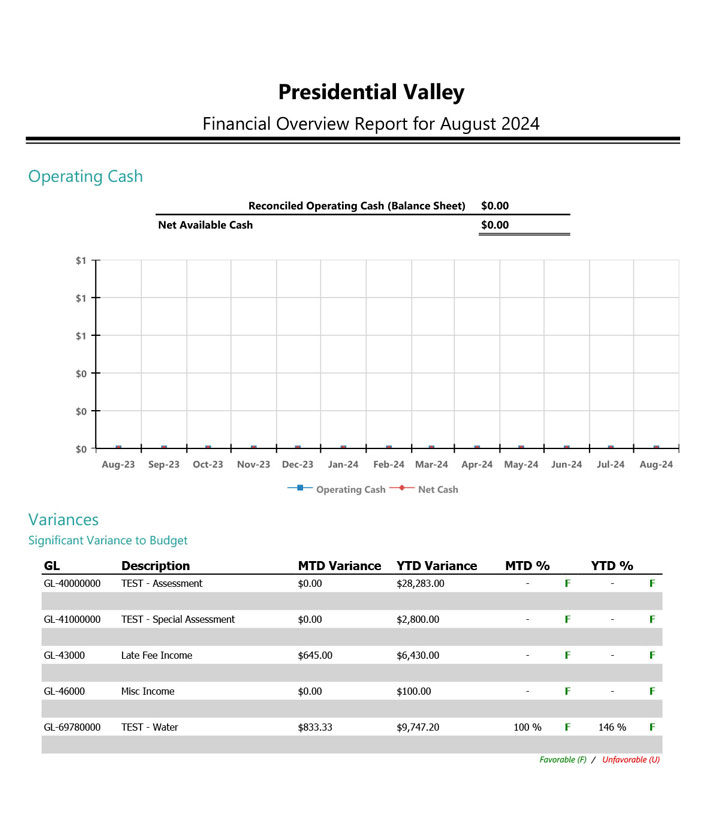
Our Board Member Experience® is shaped by that. When the Association Manager comes to your meeting, they’ve gone through everything beforehand, so the time you spend together can stay focused on what your board actually needs to decide. We send board packets out early. We write financial reports for the board members who’ll be reading them, with operating funds and reserves shown separately, and with numbers tied to what vendors are quoting now instead of figures someone carried forward from a previous budget.
Homeowner Experience
A typical day in a management office is mostly routine questions. Someone wants pool or amenity hours. Someone else is checking on their ARC application. A third person wants to confirm their payment went through. Routing all of that through your Association Manager doesn’t make any sense, and it slows down the homeowners getting answers. Our Homeowner Experience® sends those questions to the Solution Team, which is set up to handle that volume quickly. Your Association Manager handles the things that need real judgment, and when something gets bigger than what the Solution Team can resolve, the Association Coordinator picks it up.
Financial Management
Working with vendors in Lake Oswego isn’t the same as working with them anywhere else in Oregon. Property values here drive higher expectations for finish quality, which means the contractors who do consistent work at that level stay booked well in advance. Pricing reflects that reality. Insurance premiums have climbed every year for several years running, with no real sign of slowing. Material costs reflect regional supply patterns that get missed when boards plan from generic estimates.
Our financial services work from quotes provided by contractors who bid jobs in the Lake Oswego area, not from broad regional averages or last year’s budget with a percentage added. Monthly statements explain spending in simple language. Collections operate under Oregon statute, which has its own specific requirements. Reserve studies are calculated on local pricing, so the numbers your board plans around have something to do with what bids actually come back at.
Team-Based Structure
The standard model in this industry puts one manager in charge of everything for a community, and most of the time, that works fine. The problem is what happens when it doesn’t. One vacation, one illness, one resignation, and there’s a service gap, with vendor calls going unanswered and projects losing momentum. Whatever the manager knew about your community usually walks out the door with them.
That problem is exactly what our team structure addresses. Your Association Manager is the one carrying the board relationship and stepping into the situations that take experience to handle correctly. Vendor work and project tracking go through the Association Coordinator. The Solution Team picks up the homeowner volume that would otherwise pile up. The whole team operates from the same systems and the same records, so when somebody’s out, the work doesn’t stall, and your board doesn’t end up explaining it to homeowners.
Traditional management assigns everything to one manager. When that person takes a vacation, gets sick, or quits, service drops immediately. Deadlines slip. Vendors don’t hear back. All that manager’s knowledge leaves with them.
Our team structure prevents these problems. Association Managers handle board relationships and complex problem-solving. Association Coordinators manage projects and vendors. The Solution Team handles daily homeowner questions. Everyone uses shared systems, so service continues when someone’s unavailable.
Lake Stevens communities see real benefits. Email about an urgent issue late afternoon, and you’ll get a response, even if your main contact left early. Projects keep moving along because multiple people know the status. When staff leave, institutional knowledge stays documented.
New board members can access organized records instead of reconstructing history from scattered emails. When questions arise about previous board decisions, documentation provides context.
Montana communities handle harsh winters and specific seasonal maintenance requirements. Properties in growing cities like Bozeman and Missoula need management that understands both the environmental challenges and the state’s regulatory framework for community associations.
Technology That Helps the Work
Optics 360 puts regular property video in front of our team, which catches maintenance issues that would otherwise go unnoticed until they get worse. Board members can pull the same footage through the portal whenever they want a look at something, which helps when you have a question about a specific area and don’t want to wait for the next walk-through. The footage over time also tells you whether a recurring issue, like a drainage problem near a particular building, is actually getting worse or just looks rough after a hard rain.
The rest of your community’s information lives in a cloud-based system that includes financial records, vendor contracts, meeting minutes, and historical correspondence. A new board member trying to figure out why a vendor relationship ended in 2022 can log in and find out, instead of reconstructing the story from somebody’s email archive. The records stay with the community, not with whichever staff member happened to handle them.

Why Lake Oswego Communities Choose Nova
What actually matters when boards evaluate a management company comes down to a few things. Working vendor relationships in the Lake Oswego area. Familiarity with what local projects actually cost. Active engagement with Oregon community association law through CAI (Community Associations Institute) involvement. Our customized management solutions are built around what your community needs, not a generic package designed somewhere else.
Let's Talk About Your Lake Oswego Community
Contact us to connect with our team. Tell us about your association, and we’ll walk through what working together would look like.
FAQs
What does HOA management in Lake Oswego usually cover?
A management company is generally responsible for keeping the operational side of an association running, which covers a lot of ground in practice. On the administrative side, that means coordinating with vendors, running board meetings, keeping the community in compliance with its governing documents, processing architectural review applications, and handling homeowner communications. Financially, we prepare the annual budget, send out monthly reports, run collections, handle accounts payable, manage reserve funds, and take care of year-end tax filings and audit support. Property work is its own category and covers vendor oversight, preventive maintenance scheduling, and compliance inspections. In Lake Oswego specifically, all of that gets done against a contractor market where qualified vendors stay busy with high-end work, insurance rates that haven’t stopped climbing, and the requirements built into ORS Chapter 94 and ORS Chapter 100.
How does Nova stay current with Oregon HOA law?
Through active CAI membership and ongoing professional development focused specifically on Oregon community association statutes. When the legislature amends ORS 94 or ORS 100, we work through what the changes actually mean for your governing documents and your situation, rather than sending out a generic notification. Meeting procedures, collections, reserve disclosures, and financial reporting all follow current Oregon requirements, not practices that may have been accurate a few years back.
What communities does Nova manage in Lake Oswego?
We manage single-family HOAs across First Addition, Lake Grove, and the neighborhoods surrounding Oswego Lake, along with condo associations in both the older lakefront buildings and the newer mixed-use developments. Our townhome clients include communities from the past two decades of construction. We also work with larger planned communities like those in the Mountain Park area, and we handle a number of gated and lifestyle communities that come with lake access and amenity infrastructure. For new developments, we provide developer services through the transition to a homeowner board. Some associations bring us on for full management, while others want us to handle specific functions, and our customized management solutions accommodate either approach.
How does Nova handle reserves and financials?
There’s almost always a gap between what a regional reserve study estimates and what a Lake Oswego contractor will actually quote on the job. Most boards run into that gap mid-project, which is not where anyone wants to be having the conversation. We approach reserves differently, using local pricing data and current quotes from vendors who actually work this market, so the figures your board plans around hold up when bids come in. Monthly financial services reports are written for board members, with operating funds and reserves clearly separated in plain language. Collections go by Oregon statute. Books are ready at year-end before your CPA has to follow up.
How does transitioning to Nova work?
The preparation work happens before the start date rather than after. Governing documents, financial records, and vendor contracts get gathered and reviewed while we’re setting up systems, and by the time we officially take over management, we know where things stand. Homeowners hear from us before the transition, so the change isn’t a surprise, and your board has a real conversation with us early about what’s worked, what hasn’t, and what you actually want from a management company. At the 60-day mark, we sit down again and look honestly at whether the service is landing where your board expected.
Contact us to talk through what this would look like for your association.
Traditional management assigns everything to one manager. When that person takes a vacation, gets sick, or quits, service drops immediately. Deadlines slip. Vendors don’t hear back. All that manager’s knowledge leaves with them.
Our team structure prevents these problems. Association Managers handle board relationships and complex problem-solving. Association Coordinators manage projects and vendors. The Solution Team handles daily homeowner questions. Everyone uses shared systems, so service continues when someone’s unavailable.
Lake Stevens communities see real benefits. Email about an urgent issue late afternoon, and you’ll get a response, even if your main contact left early. Projects keep moving along because multiple people know the status. When staff leave, institutional knowledge stays documented.
New board members can access organized records instead of reconstructing history from scattered emails. When questions arise about previous board decisions, documentation provides context.
Montana communities handle harsh winters and specific seasonal maintenance requirements. Properties in growing cities like Bozeman and Missoula need management that understands both the environmental challenges and the state’s regulatory framework for community associations.

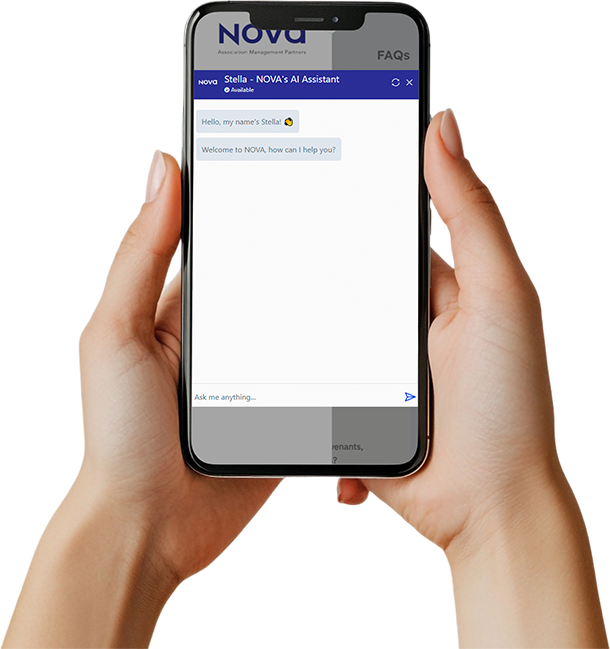
Ask Stella Anything
Our digital assistant is here for you day or night to answer questions and deploy solutions immediately.